Skip to content
the climate bug

The Climate Bug

Climate, soil and water research, explained

  • Home
  • Climate & Carbon
  • Biochar & Soil
  • Water & Pollution
  • Agriculture
  • Green Tech & Living

Adsorption

Home » Adsorption
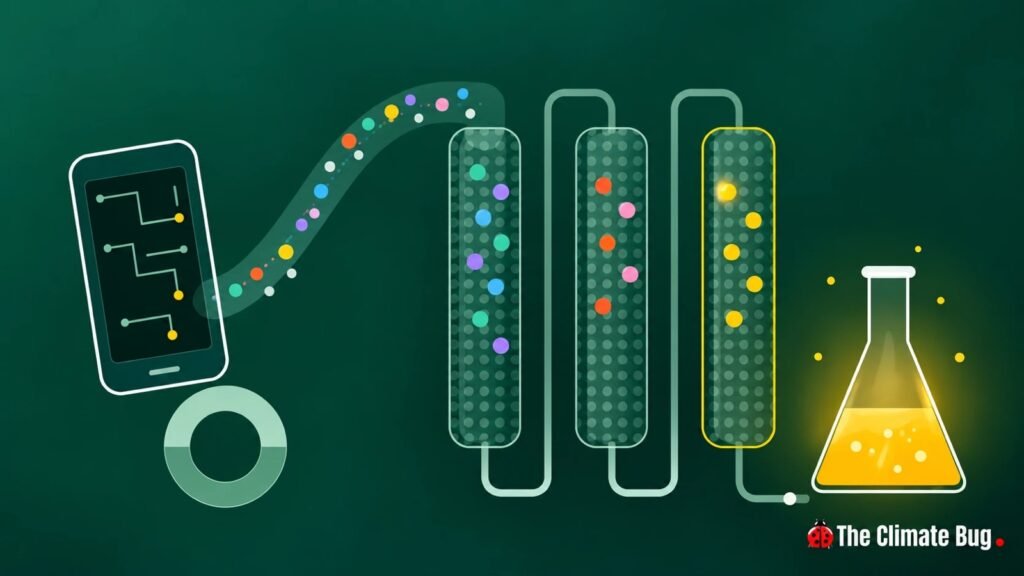
Illustration of an old phone and a magnet dissolving into coloured metal particles that flow through three filter columns, with a glowing flask collecting one target metal
Posted inGreen Technology & Living

How Smart Sponges Could Pull Rare Earth Metals from E-Waste

Old phones and magnets hold valuable rare earth metals. A new review explains how reusable "smart sponges" could pick them out of waste, and why a team of them beats a single superhero material.
Posted by Sumra Siddique November 16, 2026
biochar
Posted inWater & Pollution

Why Metal Content Matters When Biochar Treats Oil Sands Wastewater

Six biochars were tested on oil sands wastewater. The best performer wasn't the most porous one: metal content made the difference.
Posted by Sumra Siddique May 26, 2026
biochar
Posted inWater & Pollution

How Biochar Removes Mixed Dyes and Medicines from Water

Real wastewater holds many pollutants at once. A 2025 study shows how biochar's surface chemistry decides whether they compete for space.
Posted by Sumra Siddique April 29, 2026
biochar
Posted inWater & Pollution

How Pyrolysis Conditions Shape Biochar’s Ability to Clean Water

Gas, temperature and surface treatments all change how wood biochar captures painkillers and dyes, according to a 2025 laboratory study.
Posted by Sumra Siddique April 25, 2026
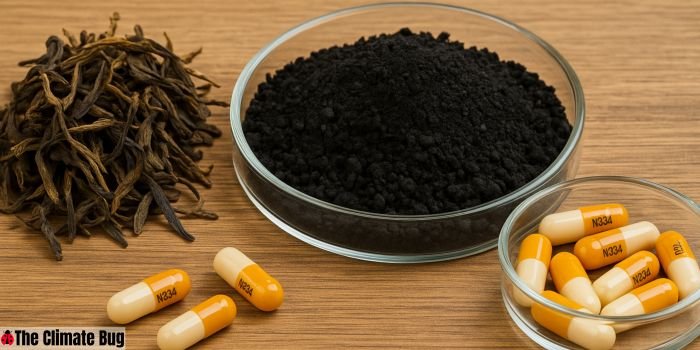
tea waste biochar with visible porous structure
Posted inWater & Pollution

Goat Manure Biochar Removes the Antibiotic Chloramphenicol from Water

Researchers combined goat manure biochar with a porous framework material to capture the antibiotic chloramphenicol. In lab tests it removed up to 99%.
Posted by Sumra Siddique April 16, 2026
biochar
Posted inWater & Pollution

Can Biochar Remove Caffeine from Water, and Be Reused?

Miscanthus biochar matched commercial activated carbon at capturing caffeine. A 2026 study also tested how well the loaded biochar can be cleaned for reuse.
Posted by Sumra Siddique April 15, 2026
Diagram linking biochar application to soil health and potential yield benefits
Posted inWater & Pollution

Tracking How Biochar Detoxifies Chromium in Flowing Groundwater

Is biochar really converting toxic chromium, or just holding it? A 2026 study used chromium isotopes to watch the process unfold in flowing water.
Posted by Sumra Siddique April 3, 2026
marine-derived materials for water purification,
Posted inWater & Pollution

Marine-Derived Biomaterials Show Exceptional Potential for Sustainable Water Purification

Global water scarcity and rising contamination from industrial effluents demand urgent, sustainable solutions. In response to this challenge, a review published in Green Chemistry by Halanur M. Manohara, Sooraj S.…
Posted by Sumra Siddique August 14, 2025
tea waste being transformed into biochar, used to purify water by removing methylene blue dye
Posted inWater & Pollution

Turning Tea Waste into a Water Purifier: Removing Methylene Blue with Biochar

Tea Waste Biochar: A Low-Cost Solution for Methylene Blue Removal from Wastewater Learn how scientists remove methylene blue from water using biochar made from tea waste—an affordable and eco-friendly way…
Posted by Sumra Siddique July 23, 2025
tea waste biochar with visible porous structure
Posted inWater & Pollution

Doped Tea Waste Biochar Captures the Antibiotic Tetracycline

Spent tea leaves, doped with sulphur and their own nitrogen, became a biochar that adsorbed 9.38 times more tetracycline than ordinary tea biochar.
Posted by Sumra Siddique July 22, 2025

The Climate Bug

Climate, soil and water research, explained in plain language with references to the original studies.

Topics

  • Climate Science & Carbon
  • Biochar & Soil Health
  • Water & Pollution
  • Sustainable Agriculture
  • Green Technology & Living

The site

  • Home
  • All articles

© 2025–2026 The Climate Bug

Scroll to Top