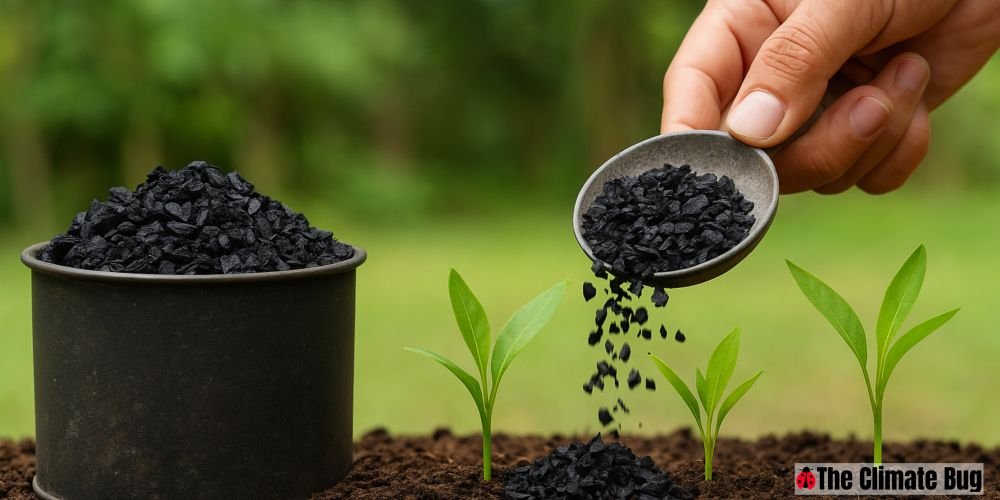

Jyotirmay Roy and his team share an important story about soil pollution. Today, many soils contain toxic elements like cadmium, lead, and arsenic. These pollutants mainly come from human activities such as industry and farming. As a result, they remain in soil for a long time and enter crops. Eventually, they affect human health. To solve this problem, the study introduces biochar, a carbon-rich material made from biomass. Moreover, scientists now modify biochar to improve its performance.
Material Method
Instead of performing a single experiment, the researchers reviewed many studies. First, they collected 1170 research papers from 2010 to 2024 using the SCOPUS database. Then, they selected relevant studies based on specific keywords. After that, they checked the quality and removed weaker studies. In addition, they used tools like R and VOSviewer for analysis. Therefore, this approach helped them understand global research trends clearly.
Result
Over time, research has changed significantly. Earlier studies focused on basic biochar. However, recent work highlights modified biochar. Scientists now improve biochar using metals, acids, and nanoparticles. As a result, its ability to trap toxic elements increases. In addition, biochar works through adsorption and ion exchange. Because of this, it reduces pollutant movement in soil. Meanwhile, the study also shows strong global research growth. For example, China and the USA lead this field. Still, performance depends on soil conditions and environment.
Conclusion
Overall, this study offers a hopeful solution. Modified biochar can clean polluted soil and protect food systems. At the same time, some challenges remain. For instance, long-term stability still needs more research. Furthermore, field performance must improve. Therefore, future studies should focus on real-world applications. In the end, biochar has strong potential to support a cleaner environment.
Reference
Roy, J., Dutta, S., Pal, T., Sarowar, S. G., Saha, C., & Rupesh, T. (2026). Modified biochar for remediation of potentially toxic elements in soils: a systematic review of modification approaches, novel mechanisms and field-scale applications. Discover Soil. https://doi.org/10.1007/s44378-026-00170-8