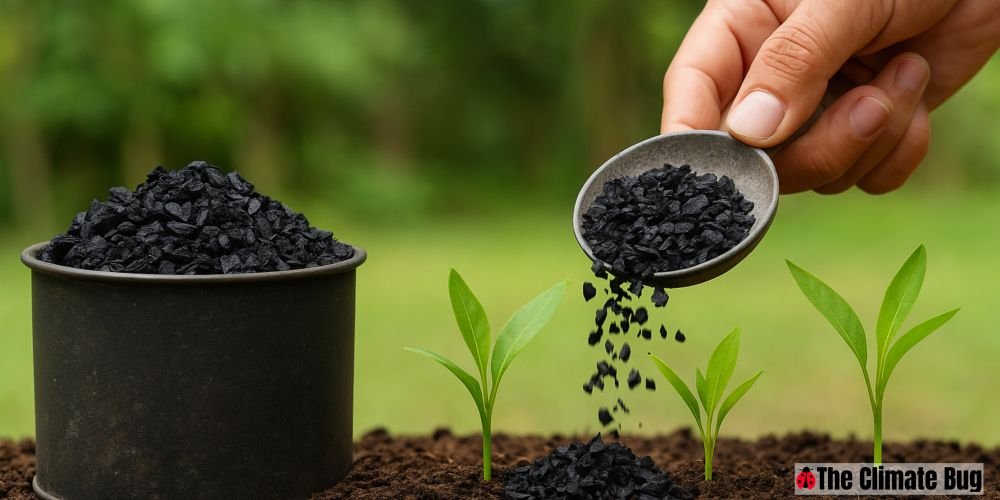

Agriculture today faces a tough challenge. Farmers must grow more food while using less water. Climate change makes this even harder, especially in regions like Spain where olive farming depends on irrigation. At the same time, farms produce large amounts of waste, such as olive residues. Most of this waste goes unused. This study explores a simple idea—convert that waste into biochar and return it to the soil. The goal is to see if biochar can improve soil health, plant performance, and olive yield under real farming conditions.
Materials and Methods
The researchers carried out a field experiment in a super-intensive olive grove in southwestern Spain. They tested four treatments: untreated soil, biochar, green compost, and a mix of biochar and compost. They produced the biochar from olive waste using high-temperature pyrolysis. This process created a porous, carbon-rich material that can hold water effectively. The team applied each treatment around the trees and maintained controlled irrigation. Throughout the season, they measured soil moisture, soil compaction, plant health, and olive yield.
Results
In conclusion, this research demonstrates how a simple and sustainable approach—turning agricultural waste into biochar—can bring meaningful improvements to soil quality and plant performance. By enhancing soil moisture retention and reducing compaction, biochar helps olive trees grow more efficiently, especially under limited water conditions. Although it does not significantly increase oil production, its positive effects on yield and plant health make it a valuable tool for sustainable agriculture. This study highlights the potential of biochar as part of a circular economy strategy, where waste materials are reused to support agricultural productivity and environmental sustainability.
Reference
The reference for this study is: De la Rosa, J.M.; Campos, P.; Diaz-Espejo, A. (2022). Soil Biochar Application: Assessment of the Effects on Soil Water Properties, Plant Physiological Status, and Yield of Super-Intensive Olive Groves under Controlled Irrigation Conditions. Agronomy, 12, 2321.