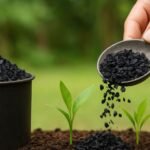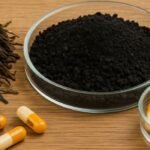

Caffeine is one of the most widely consumed compounds in the world. However, caffeine pollution has become a growing concern in water systems. As a result, researchers now classify caffeine as an emerging contaminant. Traditional wastewater treatments often fail to remove caffeine completely. Therefore, scientists are exploring better methods for caffeine removal from water. In this study, the authors investigate biochar as an effective and sustainable adsorbent. In addition, they examine how biochar materials can be reused after adsorption, which improves the overall efficiency of water treatment systems.
🔬 Material Method
First, the researchers produced two types of biochar from birchwood and miscanthus biomass. Then, they activated these biochars using carbon dioxide at high temperatures to enhance adsorption performance. Next, they compared the activated biochars with commercial activated carbon. After that, they conducted batch adsorption experiments using caffeine-contaminated water. They also tested different conditions, including contact time and pH levels, to optimize caffeine adsorption. Finally, they applied different regeneration methods, including solvent desorption and supercritical CO₂ extraction, to evaluate how well the adsorbents could be reused.
🌾 Result
The results clearly demonstrate strong differences in adsorption performance. In particular, miscanthus-based biochar showed the highest caffeine adsorption capacity. It achieved up to 176 mg/g, which was higher than commercial activated carbon. This result shows that adsorption efficiency depends not only on surface area but also on pore structure and surface chemistry. In addition, caffeine adsorption mainly occurred through π-π interactions, hydrogen bonding, and pore filling mechanisms. Meanwhile, pH had minimal influence on caffeine removal. For regeneration, methanol and ethanol showed the highest desorption efficiencies. As a result, they removed up to 78% of adsorbed caffeine. On the other hand, supercritical CO₂ showed lower efficiency. However, it provided a cleaner and more environmentally friendly regeneration method.
🌍 Conclusion
Overall, this study confirms that biochar adsorption is an effective method for caffeine removal from water. In fact, biochar-based adsorbents can outperform traditional activated carbon. Furthermore, solvent-based regeneration methods provide high efficiency for reusing adsorbents. However, supercritical CO₂ offers a more sustainable and green alternative. Therefore, biochar technology presents a promising solution for wastewater treatment and pollutant removal. In the future, researchers can optimize biochar properties and regeneration techniques to improve large-scale applications.
📚 Reference
Lee, H.; Fiore, S.; Berruti, F. (2026). Caffeine adsorption on biochar and subsequent desorption using solvents and supercritical CO₂. Biomass and Bioenergy.