
Liu’s interest in chemistry began at Harvard College, where he first discovered a passion for organic synthesis — the process of building molecules atom by atom. Later, during his doctoral research at MIT, he not only expanded his skills but also worked on creating new catalysts; as a result, he was able to broaden the possibilities of chemical reactions.
Now, as he leads his own lab at Harvard, Liu focuses on practical challenges such as energy storage and greenhouse gas capture. Moreover, his team actively looks for ways to use nonmetals — elements that are cheap and abundant — in order to perform transformations that were once only possible with metals. Therefore, this strategy not only reduces costs but also allows for innovations that are both affordable and scalable.
How Sunlight Powers Carbon Capture
Direct air capture (DAC) is essential for reducing greenhouse gases. However, most current systems require large amounts of energy, which makes them costly and difficult to scale. Liu’s team has developed a different approach.
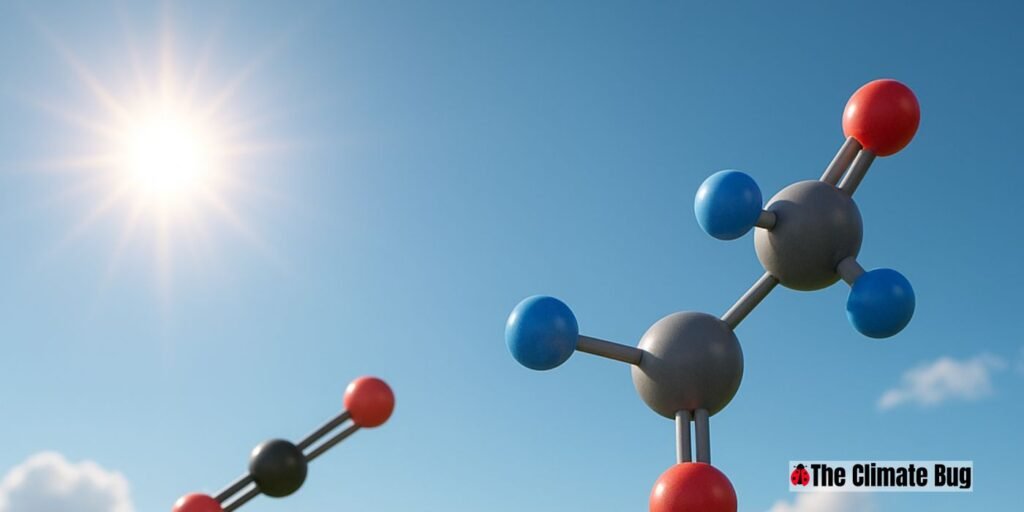
They designed organic “photobases” — molecules that absorb sunlight and produce hydroxide ions. These ions quickly bind with CO₂, capturing it from the air. Even better, the process is reversible. By switching the light, the molecules can release the CO₂ and start the cycle again.
Therefore, instead of relying on heat or heavy energy inputs, this system can be powered almost entirely by sunlight. As Liu explained:
“The general strategy of using light directly as the energy source is a new approach.”
This shift could lower costs and create a more sustainable pathway for carbon removal.
From Molecule Building to Climate Impact
Liu’s interest in chemistry began at Harvard College, where he quickly discovered a passion for organic synthesis — the art of building molecules atom by atom. As his studies progressed, he became increasingly drawn to the creativity of designing molecular structures. Later, during his doctoral research at MIT, he advanced this passion by developing new catalysts. These innovations not only pushed the boundaries of chemical reactions but also demonstrated how fundamental research can lead to practical applications.
Today, as the leader of his own lab at Harvard, Liu directs his attention to pressing global challenges such as energy storage and greenhouse gas capture. In addition, his team explores innovative ways to use nonmetals — elements that are both cheap and abundant — to perform transformations once thought possible only with expensive metals. As a result, this strategy paves the way for solutions that are affordable, scalable, and environmentally sustainable.
The Climate Bug Takeaway
This breakthrough shows how sunlight, the most abundant renewable resource, can be directly used to clean our atmosphere. While still early-stage, the potential for sunlight carbon capture is enormous. It represents a shift toward climate solutions powered by creativity, science, and renewable energy.
At The Climate Bug, we’ll continue to track innovations like this alongside other clean energy advances. For more, see: