
A recent study by Chukwuma et al. (2026) evaluated the use of rice straw biochar as a soil amendment for sandy soils under rain-fed rice cultivation. The researchers tested different application rates of biochar to determine its impact on soil physicochemical properties, water retention, crop performance, and environmental emissions.
Key Findings
The results clearly showed that biochar significantly improved soil quality. The optimal treatment was 100 g biochar per 5 kg soil, which enhanced soil pH, increased cation exchange capacity (CEC), and improved nutrient availability. One of the most important outcomes was the increase in water retention up to 97.7%, making sandy soils more suitable for crop production.
Impact on Crop Growth
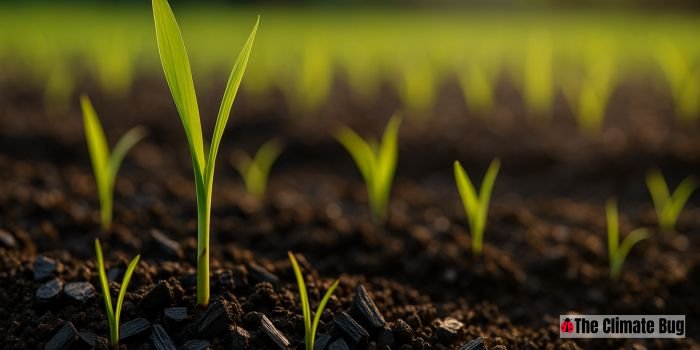
Improved soil conditions directly translated into better plant performance. Rice grown in biochar-amended soils showed higher plant height, increased tiller numbers, and greater biomass production compared to control soils. These improvements are linked to better moisture availability, enhanced nutrient retention, and improved soil structure.
Environmental Significance
Beyond soil improvement, the study highlights an important environmental benefit. Converting rice straw into biochar instead of open-field burning significantly reduces greenhouse gas emissions such as CO₂, CH₄, and N₂O. This makes biochar production a more sustainable and climate-friendly alternative for managing agricultural residues.
Conclusion
This study confirms that rice straw biochar is a practical and sustainable solution for improving sandy soil fertility, increasing water retention, and enhancing crop productivity. At the same time, it provides a cleaner alternative to traditional burning practices, contributing to reduced environmental pollution and better resource management in agriculture..
Reference
Chukwuma, E. C., Anyibuekwu, K. I., Chukwu, O., Ezeubajekwe, K. F., Dukundane, B., & Akanwa, A. O. (2026). Effects of rice straw biochar soil amendment on soil properties and environmental impact of open burning. Journal of the Saudi Society of Agricultural Sciences, 25:37. https://doi.org/10.1007/s44447-026-00138-8