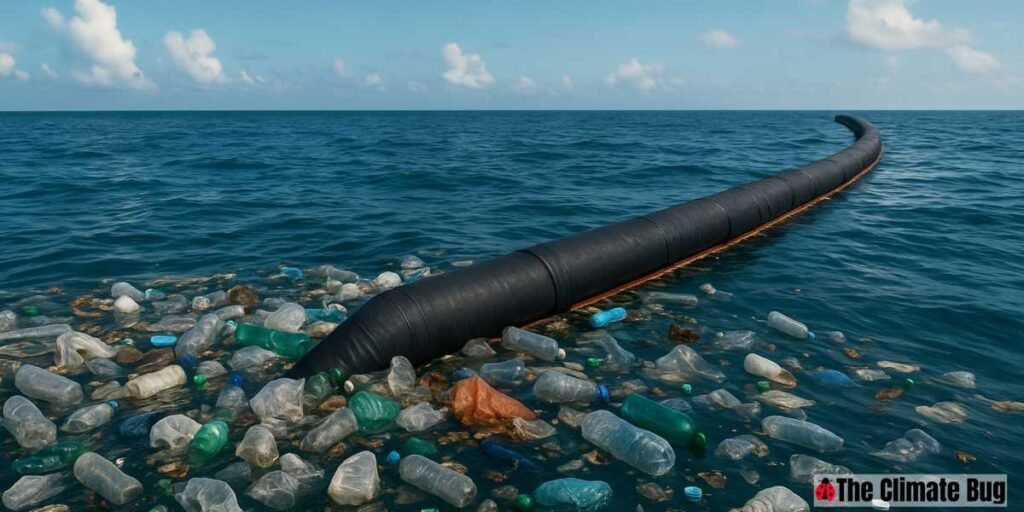

Every year, millions of tons of plastic find their way into the world’s oceans — a crisis that continues to grow at an alarming rate. While global efforts often focus on cleaning up the mess, a research team at the Norwegian University of Science and Technology (NTNU) is taking a different route: addressing the problem at its very source.
Beyond Cleanup: Rethinking Our Relationship with Plastic
“The solutions we have today mostly deal with what happens after we’ve already created the plastic waste,” says Natalya Amirova, a PhD research fellow at NTNU’s Department of Psychology. “We sort, recycle, and clean beaches — but what about changing the way we produce and consume plastic altogether?”
Amirova is part of an interdisciplinary NTNU research team investigating the main sources of plastic pollution in Norway’s marine and coastal areas. Their mission is to identify strategies that can stop plastic from entering the ocean in the first place.
“Marine plastic litter is a huge problem for ocean ecosystems,” explains Siv Marina Flø Grimstad, associate professor at the NTNU School of International Business in Ålesund and the project’s coordinator. “We still lack effective solutions to stop the flow of plastic at its origin.”
Too Much Cleanup, Too Little Prevention
The team’s review revealed a striking trend: most current efforts focus on recycling, beach cleanups, microplastic removal, or developing alternative materials. While valuable, these efforts don’t tackle the deeper causes of pollution.
Out of more than 50 measures studied, only three were identified as capable of driving meaningful change:
- The municipal network KIMO (International Organization of Local Authorities)
- Norway’s Circular Economy Strategy
- The International Ocean Panel
What unites these initiatives is their focus on pro-social and pro-ecological values — putting the well-being of people, communities, and the environment first.
- KIMO emphasizes political equality and environmental protection.
- The Circular Economy Strategy promotes ecological sustainability.
- The Ocean Panel advocates responsible ocean management.
The Missing Piece: Clear Goals and True Motivation
Despite their strengths, these measures have notable weaknesses. “All three lack defined goals and deadlines,” Amirova notes. “That makes it difficult to evaluate whether they are truly making a difference.”
She also points out that some of these initiatives are still influenced by external, materialistic values — prioritizing economic growth and status over the health of the ocean.
“When we view the ocean as the ‘world’s seventh largest economy,’ we reduce it to a financial asset,” Amirova explains. “But the ocean is far more than that it sustains life, supports mental well-being, and connects communities.”
Research shows that exposure to materialistic values leads people to make choices that prioritize wealth and status, often at the expense of the environment. Amirova references American psychologist Tim Kasser, who argues that real societal change can only happen when decision-makers embrace pro-social and pro-ecological values instead.
Changing the Narrative: From Profit to Planet
Every day, we’re influenced by messages that shape how we think and act. In a place like Times Square, advertising promotes consumerism and consumption. But in cities like Trondheim, messages may focus more on community and sustainability — reminders not to litter, or invitations to local festivals and cultural events.
“Social media and advertising play a huge role in shaping our behaviour,” Amirova says. “If we constantly view the ocean through an economic lens, we lose sight of its ecological and social value.”
A Healthier Way to Measure Progress
The researchers propose a bold idea: replace economic growth indicators with measures of ocean health.
Instead of focusing solely on financial performance, governments could evaluate progress based on water quality, biodiversity, and other ecological indicators.
They also advocate for:
- Setting clear goals and timelines to reduce plastic early in the production chain.
- Providing more support to grassroots initiatives and small businesses that follow zero-waste principles.
- Increasing the visibility of non-profit, community-driven efforts over profit-based advertising.
“For example, by supporting local zero-waste businesses, we not only reduce plastic use but also strengthen local communities,” Amirova explains.
The Urgent Need for Change
Grimstad emphasizes that the problem of marine plastic litter is more serious than ever — and growing.
“If we want to avoid having more plastic than fish in the oceans by 2050, we need to change our attitudes and our behaviours,” she warns.
That change, the NTNU team believes, starts with shifting our values — from materialism and profit toward compassion, sustainability, and community.
Reference:
Natalya Amirova, Maraja Riechers, Isabel Richter: Assessment of the transformative potential of interventions in addressing coastal and marine plastic pollution in Norway: A literature review PLOS Sustainability and Transformation, Published: July 23, 2025 https://doi.org/10.1371/journal.pstr.0000186