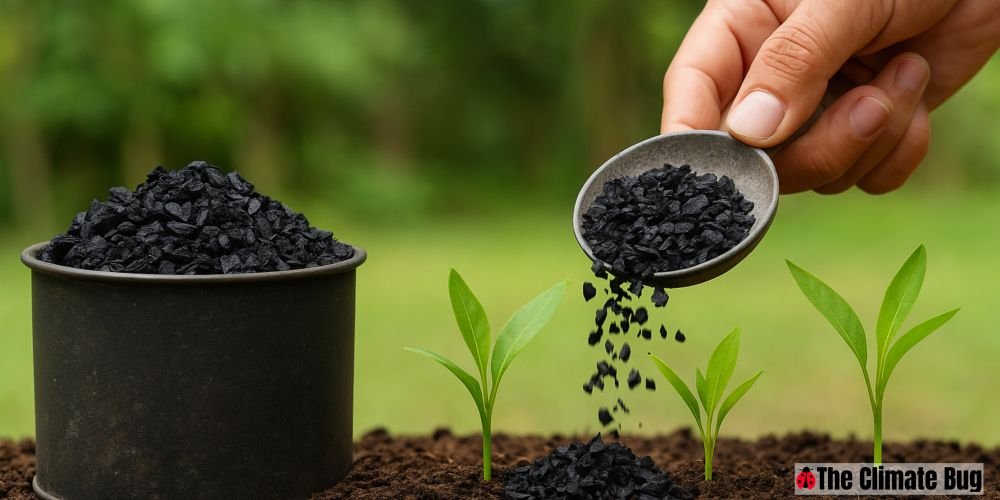

In a recent study, Ahmet Direk and his team explored an important environmental issue related to modern technology. Tiny particles called europium oxide nanoparticles are widely used in electronics and medical applications, but when they enter the environment, they can harm plants. The researchers wanted to understand how these nanoparticles affect plant growth and whether biochar could help reduce this damage. To test this, they used maize plants as a model crop and studied how biochar works as a protective material against this stress.
Experimental Approach
To make the experiment simple and controlled, the researchers grew maize plants in a nutrient solution instead of soil. They then added different concentrations of europium oxide nanoparticles to create stress conditions. After that, biochar was applied in two different amounts to see how it influences plant response. The team measured several important factors such as plant growth, water content, photosynthesis, nutrient balance, and stress indicators inside the plant. This approach helped them clearly compare the effects of nanoparticles with and without biochar.
Key Findings
The results showed that nanoparticles had a strong negative effect on maize plants. Growth decreased, photosynthesis slowed down, and the plants lost water more easily. At the same time, harmful molecules known as reactive oxygen species increased, which caused stress inside the plant. However, when biochar was added, the situation improved significantly. Plant growth recovered, photosynthesis became more efficient, and water content returned closer to normal levels. Biochar also reduced the uptake of harmful europium while increasing essential nutrients like potassium, calcium, and magnesium. In addition, it strengthened the plant’s natural defense system by increasing antioxidant activity and reducing oxidative damage.
Conclusion
This study clearly shows that biochar can act as a protective support for plants under environmental stress. It not only reduces the harmful effects of nanoparticles but also improves overall plant health and performance. These findings highlight the potential of biochar as an eco-friendly solution for sustainable agriculture, especially in environments affected by pollution. Using biochar could help farmers maintain crop productivity even under challenging conditions.
Reference
Direk, A., Arikan-Abdulveli, B., Balci, M., Gurkan, E., Gulenturk, E. O., Ozfidan-Konakci, C., & Yildiztugay, E. (2026). Biochar as an alternative strategy to mitigate europium oxide nanoparticle toxicity in maize. Environmental Research, 299, 124363.