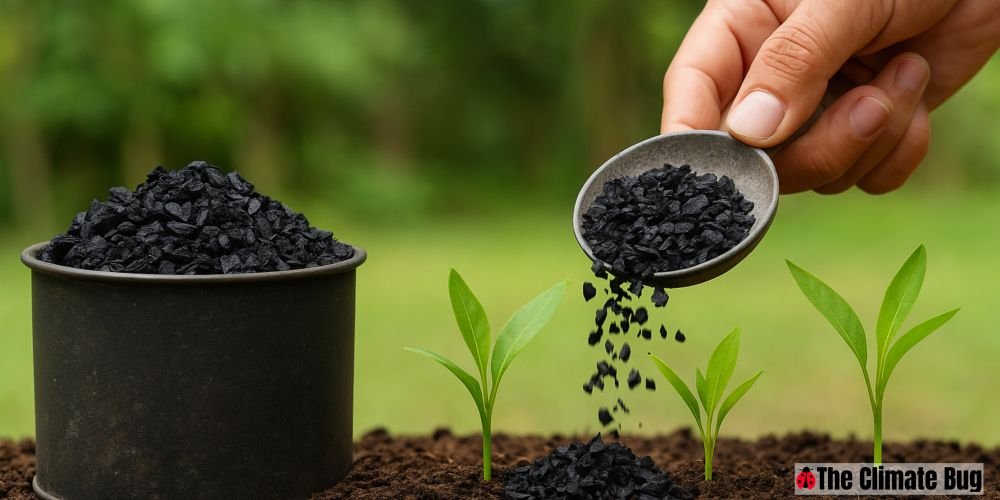

Biochar is no longer just a soil amendment. It is becoming a smart material for modern technology. In a recent study, Yaroslav A. Ionov and his team explore how biochar from agro-food waste can improve enzyme efficiency. Their work shows how waste can support both sustainability and innovation.
Turning Waste into Valuable Material
The researchers convert agricultural and food waste into biochar using pyrolysis. This process heats biomass under low oxygen conditions. It produces a stable, carbon-rich material. This approach reduces waste and creates a useful product at the same time.
Improving Enzyme Performance
Enzymes play a key role in many industries. However, heat, pH, and chemicals often reduce their activity. The researchers solve this problem by attaching enzymes to biochar. This method improves enzyme stability and allows reuse. As a result, enzymes work longer and more efficiently.
Why Biochar Works
Biochar has a porous structure and a large surface area. It also contains many functional groups. These features help enzymes attach easily and stay active. The structure protects enzymes and supports their function. This makes biochar an effective support material.
A Circular and Sustainable System
The study promotes a circular approach. Waste becomes biochar, and biochar supports industrial processes. These processes then reduce environmental impact. This cycle shows how waste can become a valuable resource. It also supports long-term sustainability.
Real-World Applications
This technology has many practical uses. In the food industry, it improves processing and product quality. In environmental applications, it helps remove pollutants. It also supports biosensors that detect contaminants and monitor food quality. These applications show its wide potential.
Conclusion
Ionov and his team show that biochar can do more than expected. It connects waste management, material science, and biotechnology. This research presents a simple but powerful idea. Waste can become a tool for efficient and sustainable technology.
Reference
Ionov, Y. A., Freinkman, O. V., Tracey, C. T., Krivoshapkina, E. F., & Nazarova, E. A. (2026). Enzyme immobilization on biochar: Prospects for recycling agro-food waste by pyrolysis. Biomass and Bioenergy, 208, 108816.
https://doi.org/10.1016/j.biombioe.2025.108816