
In this study, Mahmuda Akter Mele, along with Ravinder Kumar, Ioan Sanislav, and Elsa Antunes, explored a smart way to turn waste into value. They focused on spent coffee grounds, a common waste that people often throw away. Instead of treating it as waste, they tested if it could produce useful chemicals.
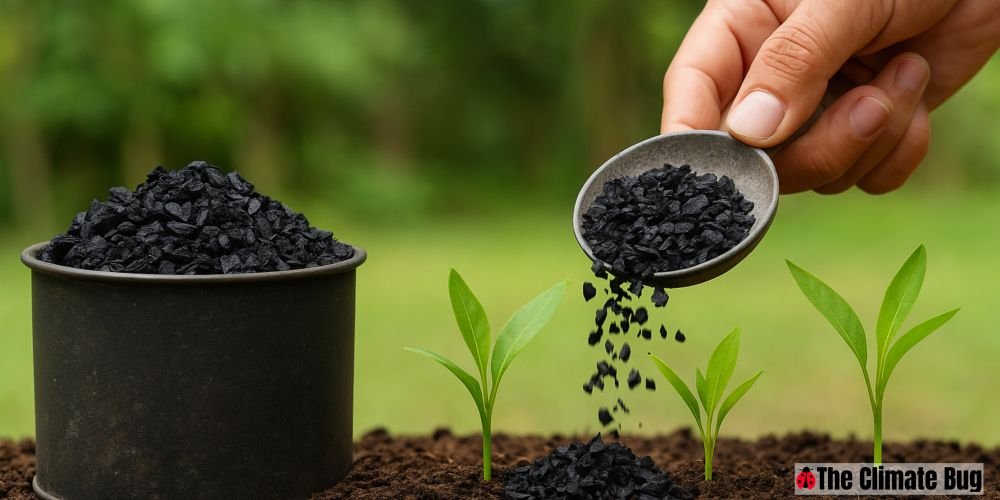
The team used catalytic pyrolysis to upgrade this waste. They chose ironbark biochar loaded with gold nanoparticles as a catalyst. Biochar is usually used for soil improvement and pollution control. However, its role in energy production is still limited. The researchers wanted to see if this special catalyst could increase the production of hydrocarbons and phenols. Their goal was simple: create a cleaner and more sustainable way to generate energy and chemicals.
Materials and Methods
The researchers first produced biochar from ironbark sawdust. They pyrolyzed it at 500 °C under a nitrogen atmosphere. After that, they added gold nanoparticles to the biochar. This step created different catalysts: BC0 (no gold), and BC1, BC2, and BC3 with increasing gold content.
Next, they collected spent coffee grounds. They dried and ground them into fine powder. Then, they analyzed the catalysts using BET, XRD, FTIR, SEM-EDS, and TGA. These techniques helped them understand surface area, pore structure, and thermal stability.
Finally, they tested the materials using Py-GC/MS catalytic pyrolysis. They ran experiments at temperatures from 450 to 750 °C. They also changed the catalyst-to-feedstock ratio to observe how product formation changed.
Research Findings
The results clearly showed that gold-loaded biochar changed the pyrolysis process. The catalyst increased the production of valuable hydrocarbons and phenols compared to the non-catalytic process.
Among all catalysts, BC1 performed the best. It had better porosity and suitable pore size. These properties created more active reaction sites. As a result, aromatics increased from 4.5% to 9.9%, and phenols increased from 2.4% to 5.5%.
At 750 °C, BC1 produced the highest hydrocarbons among gold-loaded catalysts. It favored C4–C11 hydrocarbons with about 6% selectivity. Thermal analysis also showed faster and stronger degradation of coffee waste when catalysts were used.
However, higher gold loading reduced performance. Excess gold blocked pores and limited active sites. This finding shows that balance is important. A moderate amount of gold works better than too much.
Conclusion
This study shows a simple but powerful idea. We can turn everyday coffee waste into valuable chemicals using biochar-based catalysts. Mahmuda Akter Mele and her team proved that gold-loaded ironbark biochar, especially BC1, improves catalytic pyrolysis.
The research also shows that biochar has more potential than we often think. It is not only useful for soil or pollution control. It can also support clean energy production and green chemistry.
In simple terms, this work connects waste and value. It shows how coffee waste and biomass can work together in a smart recycling system. This approach can reduce environmental pressure and create new sustainable solutions.
Reference
Mele, M.A., Kumar, R., Sanislav, I., & Antunes, E. (2026). Utilization of gold-loaded ironbark biochar-based catalyst for catalytic upgrading of spent coffee grounds: reaction kinetics, products distribution, and mechanism. Biomass Conversion and Biorefinery, 16, 135. https://doi.org/10.1007/s13399-025-06936-4