
In a recent study by Emily te Pas and her team, the focus was very simple: can we store more carbon in soil by combining biochar with crushed rocks? Instead of testing one method at a time, they decided to try both together and see what really happens in a real soil system.
They grew maize in pots using two different soils—one sandy and one clay. Then they added crushed rock (dunite) in different amounts, with and without biochar. After that, they closely monitored the system and measured key changes: how much CO₂ the soil captured, how the soil properties shifted, and how the plants grew.
How Biochar Carbon Sequestration Works with Rock Weathering
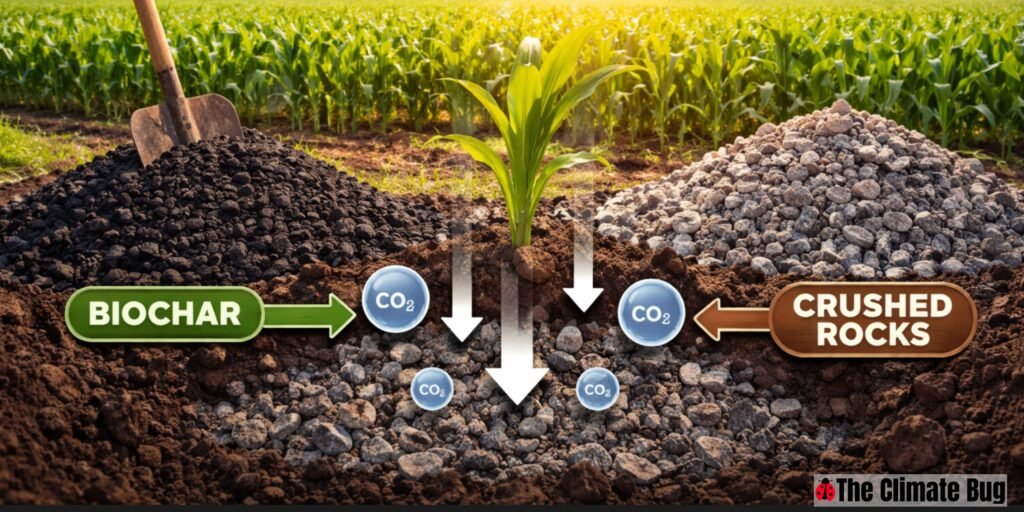
The idea behind this method is actually quite natural. The idea behind this method is simple and natural. When you add crushed rocks to soil, they react with CO₂ and convert it into stable compounds that can stay stored for a long time. Biochar works differently—it acts like a carbon sponge, holding carbon in the soil while also helping retain nutrients and minerals. When you use both together, biochar keeps important elements in place, and the rocks continue capturing CO₂ through chemical reactions. This combination creates a more efficient and stable system for carbon sequestration.
The results showed that this combination can increase carbon capture, especially over the long term. Although there was a short-term increase in CO₂ release due to higher microbial activity in the soil, the study suggests this is temporary. Over time, the formation of new minerals and improved soil structure helps lock carbon more securely. In simple terms, this approach not only removes CO₂ but also improves soil quality, making it useful for agriculture.
Overall, this research highlights a practical and scalable solution. Instead of relying on one method, combining biochar and rock weathering creates a stronger system for carbon sequestration. It’s something farmers and researchers can realistically use as we look for simple solutions to climate change.
Reference:
te Pas E.E.E.M., Comans R.N.J., Bisseling S., Hagens M. Enhanced weathering and biochar co-deployment boosts CO₂ sequestration through changing soil properties[J]. Geoderma, 2026, 466: 117668. DOI: 10.1016/j.geoderma.2025.117668.
https://theclimatebug.com/biochar-from-human-waste-as-fertiliser/