
I recently read a review that looks at how biochar interacts with soil systems, specifically in tea-growing environments. What stood out to me wasn’t just the benefits it was how interconnected everything is when biochar is introduced into soil
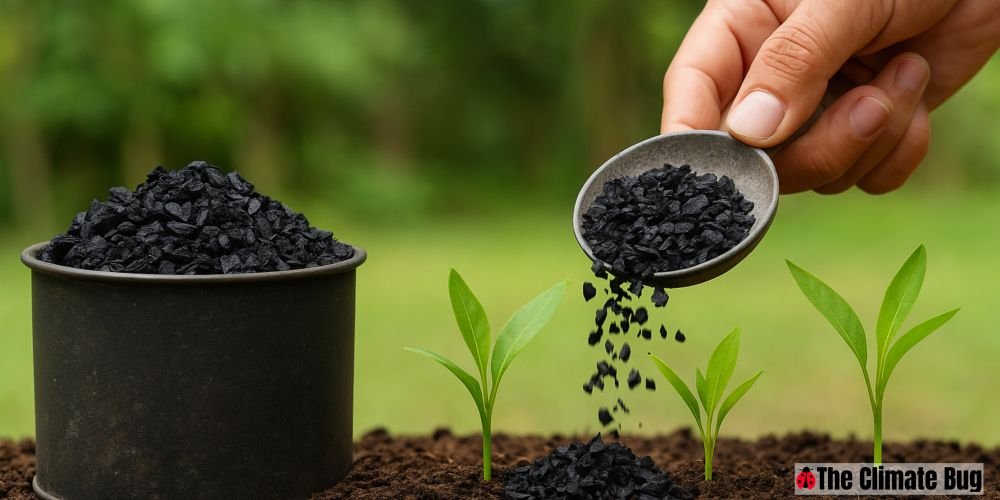
I recently read a review that looks at how biochar interacts with soil systems, specifically in tea-growing environments. What stood out to me wasn’t just the benefits—it was how interconnected everything is when biochar is introduced into soil.
How Biochar Changes Soil Conditions
The paper basically brings together findings from multiple studies and looks at five key areas: soil properties, microbes, nutrients, plant performance, and pollution control. Instead of treating these as separate pieces, it shows how biochar links them all.
One of the clearest takeaways is how biochar changes soil chemistry almost immediately. In acidic systems like tea plantations, it helps raise pH and reduce toxicity from elements like aluminum. That alone can shift how nutrients behave in the soil. But it doesn’t stop there—biochar also improves nutrient retention, meaning less nitrogen and potassium are lost through leaching.
What I found particularly interesting is the microbial side. The paper shows that biochar doesn’t just “add nutrients”—it reshapes the microbial community. It tends to favor more active, nutrient-cycling microbes, which then feed back into better soil function. So instead of acting like a fertilizer, biochar works more like a system regulator.
There’s also strong evidence that it helps reduce heavy metal availability. In tea systems, where contamination can be a real issue, biochar can bind metals like cadmium and lead, making them less available for plant uptake.
And then there’s the climate angle. Because biochar is so stable, it locks carbon into the soil for long periods. At the same time, it can reduce emissions like N2O. So it’s doing both—improving productivity and contributing to mitigation.
A big gap is that most studies are short-term or lab-based. There’s very little long-term field data, especially in tropical systems. And results vary a lot depending on how the biochar is produced feedstock, temperature, and application rate all matter.
Reference:
Md Shafiqul Islam, Shangwen Xia: Biochar–soil–tea nexus: a review of soil health, microbial interactions, and sustainable Camellia sinensis cultivation Biochar, Published: 2026
https://doi.org/10.1007/s42773-026-00580-5
https://theclimatebug.com/biochar-from-human-waste-as-fertiliser/